
Close Menu
Edu Expertise Hub
    Facebook X (Twitter) Instagram
    Thursday, January 29
    • About us
    • Contact
    • Submit Coupon
    Facebook X (Twitter) Instagram YouTube
    Edu Expertise Hub
    • Home
    • Udemy Coupons
    • Best Online Courses and Software Tools
      • Business & Investment
      • Computers & Internet
      • eBusiness and eMarketing
    • Reviews
    • Jobs
    • Latest News
    • Blog
    • Videos
    Edu Expertise Hub
    Home » Latest News » New Data Shows Some Improvement in Youth Mental Health, With a Long Way Still to Go
    Latest News

    New Data Shows Some Improvement in Youth Mental Health, With a Long Way Still to Go

    TeamBy TeamAugust 30, 2024No Comments6 Mins Read0 Views
    Facebook Twitter Pinterest LinkedIn Telegram Tumblr Email
    New Data Shows Some Improvement in Youth Mental Health, With a Long Way Still to Go
    Share
    Facebook Twitter LinkedIn Pinterest Email


    New federal data on youth mental health offers a few silver linings, but experts caution these signs of progress don’t mean U.S. students are out of the storm.

    The CDC released the results of its biennial Youth Risk Behavior Survey earlier this month, highlighting changes in students’ responses from 2021 compared to 2023.

    Over those two years, the percentage of students overall who reported feeling persistent sadness fell slightly (by 2 percent). Separated by gender, the percentage of girls reporting feeling hopeless and who said they considered suicide in the previous year both decreased.

    In 2023, Hispanic students reported lower rates of persistent sadness, overall poor mental health, thoughts of suicide and planning suicide. The rate of Black students attempting and being injured during suicide attempts both declined.

    While those recent improvements are heartening, the report also shows that mental health and well-being trends over the past 10 years are mostly heading in the wrong direction. The 2023 data reveals that students are reporting skipping school more frequently due to safety concerns and experiencing more bullying, both of which increased by 4 percent since 2021.

    Erica Fener Sitkoff, senior vice president of mental health strategy at FullBloom, says the findings of the Youth Risk Behavior Survey mirrors what her organization sees in the schools it helps develop mental health support for students.

    “[It] tells us that positive change is possible, and the improvements are encouraging,” Fener Sitkoff says. “That tells us that the increased awareness and unprecedented funding that’s come since the pandemic are working. It also tells us one year of reversing the trend doesn’t mean we can let up, because the numbers still aren’t great. We should dig deeper and invest more in what’s working.”

    Changing Mental Health Needs

    Principal Chris Young had increased the number of mental health staff at North Country Union High School in Vermont, in a rural district less than 10 miles from the Canadian border, about a year before anyone had even heard of COVID-19. Then after the health crisis hit, with two school-based clinicians, two college and career counselors, a wellness counselor and a behavior specialist, he felt the school was well-equipped to support students during the return to in-person classes after the previous school year was cut short.

    “The thing that surprised us the most when students returned in fall of 2020 was just how angry they were,” Young says. “I’d not seen a group of students collectively with this much anger. We thought students would be happy to be back and see friends, but we missed the mark on giving them time and space to mourn what they lost. They missed a whole semester, weren’t able to communicate anywhere except online, which is super unhealthy. We should have been more intentional to support them working through what they experienced.”

    Since then, Young says the school has adopted a campus-wide approach to well-being. Part of that is the creation of what they call advisory teams, where teachers lead groups of 12 to 14 students in activities that can range from icebreakers to talking about serious topics like suicide prevention and substance use.

    “That’s the biggest change, taking it from a centralized approach where some people are doing all the work, to decentralized where all teachers are doing some work and wellness [staff] are working with the most high-need kids,” Young says. “What we’re trying to do is create community. If you feel seen and heard, you’re more likely to do better in school and feel better about yourself.”

    Young’s approach aligns with what Fener Sitkoff says is the best way for schools to get students mental health support before they reach a crisis, while also preserving the bandwidth of counseling staff. She says schools can strengthen their mental health scaffolding through the addition of what she calls universal skills curriculum — which teaches students concepts like building positive relationships and advocating for themselves — along with screenings to identify students who are at risk of, but not yet experiencing, a mental health crisis.

    “Schools are going to increasingly see themselves as part of the solution, and families will, too,” Fener Sitkoff says. “Clinicians in the community often have months-long waiting lists, and families are going to schools saying, ‘Help.’ Because it shows up and attendance or grades, they can see it a little earlier.”

    A Student Perspective

    To assume that students today are comfortable reaching out for help with mental health issues would be a mistake, says high school senior Anjali Verma. The 17-year-old is president of the National Association of Secondary School Principals’ National Student Council and became a mental health advocate as a freshman.

    “I’ve had many students say they are very much struggling, especially with suicidal ideation, and they do not feel comfortable talking to an adult in their school,” Verma says. “People feel like it shows a reflection of them being lesser of a person, when that’s the furthest from the truth. I do think we are making strides toward increased wellness, but it would be wrong to assume mental health is destigmatized — because it’s absolutely not.”

    Verma says she’s had her own experiences with online bullying and, as a student athlete, saw how she and her teammates struggled with toxic competitiveness, seeing “our identity in athletics and not seeing each other as people first.”

    “They feel like their mental health isn’t taken [as seriously] as physical health,” she says. “It’s so much easier to talk to someone for a taped ankle than for when they were feeling hopeless.”

    Verma is a strong advocate for peer-to-peer support, training students to recognize the signs of distress in themselves and their friends — and how to connect with mental health resources.

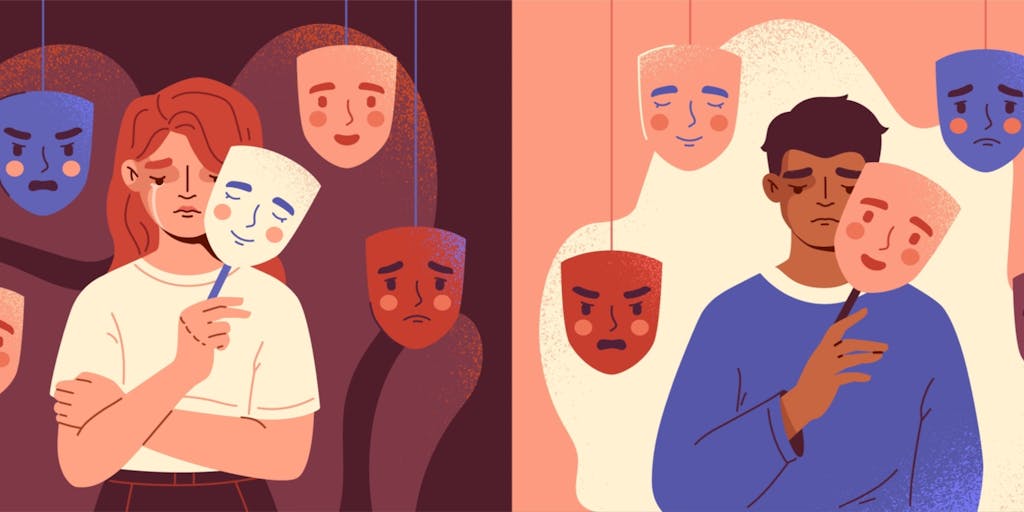
    One challenge adults need to keep in mind, she says, is that teens are good at hiding their pain. Referring to the Youth Risk Behavior Survey’s data showing that girls report feeling persistently sad or hopeless at higher rates than boys, Verma says that number doesn’t tell the whole story considering that other national data shows men die by suicide at rates four times higher than women.

    “That’s a way that the stigma comes into play: Boys and male-identifying people feel they’re weak if they ask for help, or they are not manly enough if they’re seen struggling,” she says.

    If a student is going to signal they need help, she adds, it’s likely going to start with their peers.

    “It’s teaching them things like self-care, emotional first aid kits, what they can have in their back pocket for when they’re having an anxiety-inducing situation or don’t feel like themselves,” Verma explains. “Making sure there is a body of students trained to know what to do when peers are in crisis [is important] because a lot of times students take it upon themselves to take on a friend’s struggles when, a lot of times, a mental health professional needs to step in.”

    This post is exclusively published on eduexpertisehub.com

    Source link

    Share. Facebook Twitter Pinterest LinkedIn Tumblr Email
    Team

      Related Posts

      Scaling structured literacy with implementation science

      December 7, 2025

      Interview: Paul Neville, director of digital, data and technology, The Pensions Regulator

      December 7, 2025

      Students Want Power, Not Worksheets. Schools Must Teach Them to Organize.

      December 7, 2025

      Solving the staffing crisis is key to the Science of Reading movement

      December 6, 2025

      Cyber teams on alert as React2Shell exploitation spreads

      December 6, 2025

      Teaching Sex Education in Schools Is More Fraught Than Ever

      December 5, 2025
      Courses and Software Tools

      Welcome to AI: A Human Guide to Artificial Intelligence

      March 20, 2024126 Views

      Extreme Privacy: What It Takes to Disappear

      August 24, 202481 Views

      Modern C++ Programming Cookbook: Master Modern C++ with comprehensive solutions for C++23 and all previous standards

      September 18, 202434 Views

      Meebook E-Reader M7 | 6.8′ Eink Carta Screen | 300PPI Smart Light | Android 11 | Ouad Core Processor | Out Speaker | Support Google Play Store | 3GB+32GB Storage | Micro-SD Slot | Gray

      August 19, 202429 Views

      HR from the Outside In: Six Competencies for the Future of Human Resources

      May 20, 202525 Views
      Reviews

      Truth Worth Telling

      December 8, 2025

      Womens Tops Summer Sweater Short Sleeve Shirts Dressy Casual Basic Casual Cap Sleeve Tops Beach Vacation Clothes

      December 8, 2025

      The Model Thinker: What You Need to Know to Make Data Work for You

      December 8, 2025

      Scaling structured literacy with implementation science

      December 7, 2025

      How to Accept a Job Offer Professionally

      December 7, 2025
      Stay In Touch
      • Facebook
      • YouTube
      • TikTok
      • WhatsApp
      • Twitter
      • Instagram
      Latest News

      Scaling structured literacy with implementation science

      December 7, 2025

      Interview: Paul Neville, director of digital, data and technology, The Pensions Regulator

      December 7, 2025

      Students Want Power, Not Worksheets. Schools Must Teach Them to Organize.

      December 7, 2025

      Solving the staffing crisis is key to the Science of Reading movement

      December 6, 2025

      Cyber teams on alert as React2Shell exploitation spreads

      December 6, 2025
      Latest Videos

      How to Choose a Hacking Course?

      December 7, 2025

      Don’t Become a Data Analyst if

      December 6, 2025

      FC 25 vs eFootball 2025 – Graphical Details, Player Animation – Comparison! #fc25 #efootball

      December 4, 2025

      Career Game #360: Devin Booker Scoring Highlights vs BOS (02/07/2021)

      December 3, 2025

      is the CISM REQUIRED for a CYBERSECURITY career?

      December 2, 2025
      Latest Jobs

      Senior Associate, AI Data Scientist

      November 21, 2025

      Nursing Adjunct Faculty – Part-Time Nursing Instructors Needed

      November 21, 2025

      Sr. Firewall Engineer

      November 21, 2025

      Portfolio Analyst

      November 21, 2025

      Vehicle Service Specialist

      November 21, 2025
      Legal
      • Home
      • Privacy Policy
      • Cookie Policy
      • Terms and Conditions
      • Disclaimer
      • Affiliate Disclosure
      • Amazon Affiliate Disclaimer
      Latest Udemy Coupons

      ISO 9001:2015 – Quality Management System Internal Auditor | Udemy Coupons 2026

      May 5, 202537 Views

      Advanced Program in Human Resources Management | Udemy Coupons 2026

      April 5, 202536 Views

      Mastering Maxon Cinema 4D 2024: Complete Tutorial Series | Udemy Coupons 2026

      August 22, 202436 Views

      Diploma in Aviation, Airlines, Air Transportation & Airports | Udemy Coupons 2026

      March 21, 202531 Views

      Time Management and Timeboxing in Business, Projects, Agile | Udemy Coupons 2026

      April 2, 202527 Views
      Blog

      How to Accept a Job Offer Professionally

      December 7, 2025

      How to Express Gratitude Professionally

      December 6, 2025

      How to Make a Strong Impression

      December 5, 2025

      Thank-You Letter Template for Recommendation Letter: How to Express Gratitude

      December 4, 2025

      How to Track Products Without the Admin Overload –

      December 3, 2025
      Facebook X (Twitter) Instagram Pinterest YouTube Dribbble
      © 2026 All rights reserved!

      Type above and press Enter to search. Press Esc to cancel.

      We use cookies on our website to give you the most relevant experience by remembering your preferences and repeat visits. By clicking “Accept”, you consent to the use of ALL the cookies.
      .
      SettingsAccept
      Privacy & Cookies Policy

      Privacy Overview

      This website uses cookies to improve your experience while you navigate through the website. Out of these, the cookies that are categorized as necessary are stored on your browser as they are essential for the working of basic functionalities of the website. We also use third-party cookies that help us analyze and understand how you use this website. These cookies will be stored in your browser only with your consent. You also have the option to opt-out of these cookies. But opting out of some of these cookies may affect your browsing experience.
      Necessary
      Always Enabled
      Necessary cookies are absolutely essential for the website to function properly. This category only includes cookies that ensures basic functionalities and security features of the website. These cookies do not store any personal information.
      Non-necessary
      Any cookies that may not be particularly necessary for the website to function and is used specifically to collect user personal data via analytics, ads, other embedded contents are termed as non-necessary cookies. It is mandatory to procure user consent prior to running these cookies on your website.
      SAVE & ACCEPT